 Aaron Kosovich
Economic guidance
for a changing world
Aaron Kosovich is an Australian economist with over a decade of experience applying economic rigour to complex projects. He specialises in major infrastructure and renewable energy projects, distilling insight by isolating the variables that matter most.

Work with one of Australia’s leading economists.
Aaron Kosovich is an economist with over a decade of experience developing business cases for major investments in infrastructure, energy, and public initiatives.
Make better decisions under uncertainty.
He specialises in modelling real-world decisions that are subject to evolving assumptions, using probabilistic and scenario-based approaches to demonstrate potential outcomes.
Draw from rich project experience across infrastructure and energy.
Aaron has led the economic evaluation of projects ranging from the economic impact of the University of Melbourne estate to the National Resting Place (Ngurra). Formerly an Associate Director at Urbis, with additional experience at GHD and Siemens, he brings a combination of economic judgement and engineering context to every engagement. He holds an Honours degree in Economics and a Master of Science from the Technical University of Munich.
Areas of Practice
Business Case Development
Cost–Benefit Analysis
Economic Impact Assessments
Transport Infrastructure
Renewable Energy
Project Appraisal
Demand Forecasting
Financial Feasibility
Selected Work
Projects where Aaron contributed as Lead Economist.
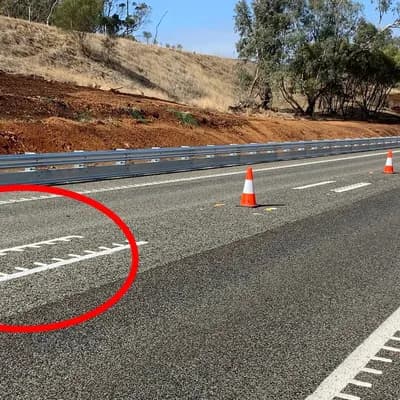
WA Regional Road Safety — Infrastructure Australia Business Case
Main Roads WA · Perth, WA
Stage 2 and Stage 3 business case for a ~$1bn program of road safety upgrades across regional Western Australia.
Aaron was engaged by Main Roads WA to complete Stage 2 (Option Evaluation) and Stage 3 (Business Case Development) for the WA Regional Road Safety Initiative, an almost $1bn program of upgrades comprising over 80 projects and more than 10,000km of road upgrades across regional Western Australia. Aaron worked with road safety experts within GHD to conduct detailed cost-benefit analyses of each project, and prioritised the order of works to be completed between 2020 and 2030.
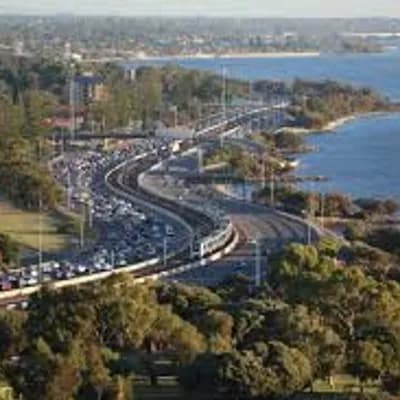
Kwinana Freeway Upgrades
Main Roads WA · Perth, WA
Business case and economic modelling for a $46m infrastructure upgrade to Perth's Kwinana Freeway.
Aaron was engaged by Main Roads WA to develop a business case and provide economic and financial modelling for a $46m infrastructure upgrade to Perth's Kwinana Freeway. These upgrades included strengthening the seawall of the freeway and demonstrating expected safety improvements and congestion alleviation from reduced road inundation events.
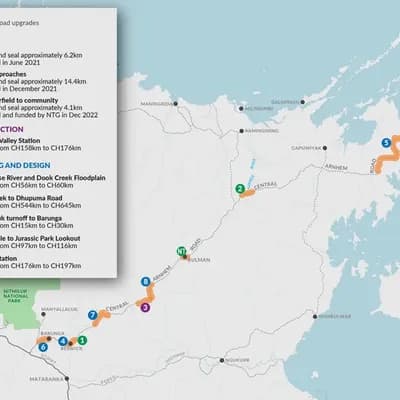
Central Arnhem Road Upgrades
Infrastructure NT · Darwin, NT
Business case for a $355m long-term road upgrade program for a 645km stretch connecting Nhulunbuy with the Stuart Highway.
Aaron developed the business case for a $355m long-term road upgrade program for Central Arnhem Road, a 645 kilometre stretch connecting the remote community of Nhulunbuy with the Stuart Highway. Aaron's economic evaluation quantified the impact of these important road safety upgrades and enhanced connectivity to isolated Aboriginal communities and mining and pastoral industrial sites.
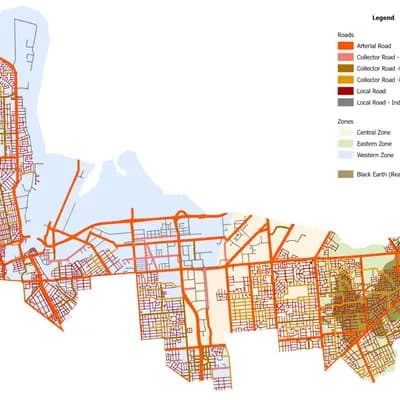
Port Adelaide Infrastructure Upgrade Program Prioritisation
Department for Infrastructure and Transport · Adelaide, SA
Prioritisation of over twenty competing infrastructure upgrades in the Port Adelaide area.
Aaron was tasked with conducting a detailed prioritisation of over twenty competing infrastructure upgrades in the Port Adelaide area, each with different objectives and challenges. Aaron conducted a rapid cost-benefit analysis for each project and provided impact-based recommendations.
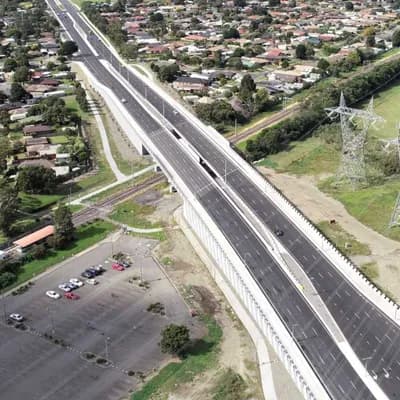
Thompsons Road Cost-Benefit Analysis
Major Road Projects Victoria · Melbourne, VIC
Cost-benefit analysis for the extension of Thompsons Road, demonstrating VTT, VOC, safety, and environmental benefits.
Aaron worked with GHD traffic engineers and MRPV to develop a cost-benefit analysis for the extension of Thompsons Road. The business case demonstrated associated VTT, VOC, safety and environmental benefits from the upgrade.
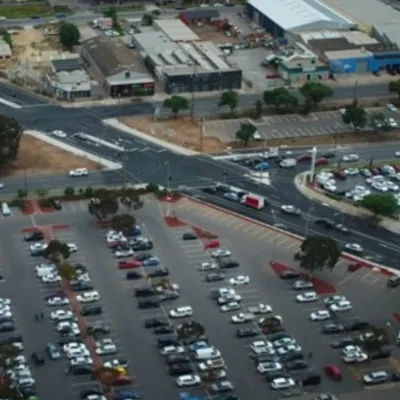
Port Rd & West Lakes Blvd Upgrade
Department for Infrastructure and Transport · Adelaide, SA
Business case for the upgrade of a mixed road and rail intersection with complex road safety challenges.
Aaron developed a business case to support the upgrade of Port Rd & West Lakes Blvd, a mixed road and rail intersection that faced complex challenges with regards to road safety.
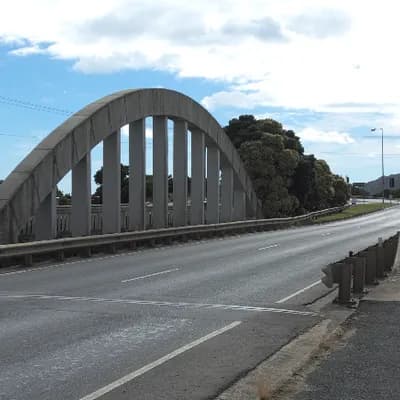
Burnie Bridge Upgrade Cost-Benefit Analysis
Infrastructure Tasmania · Burnie, TAS
Business case for a highly-trafficked end-of-life bridge asset posing a safety risk to the community.
Aaron was tasked with developing a business case for a highly-trafficked end-of-life asset that posed a safety risk to the community. The economic evaluation of this project required accounting for road closures and complex re-routing of freight transit during the construction timeframe.
Education


Reschematic
When I started my career ten years ago I wondered: why don’t we have any software to help us with economic modelling? As recently as two years ago, I was still wondering the same thing.
In response to this I built Reschematic to make project evaluation not only easier, but more accessible. It’s a project screening tool that leverages AI to build CBA and ROI models. Local governments and not-for-profits find it particularly useful in helping them to move faster, present interactive business cases, and showcase the initiatives that deserve attention.
My experience building Reschematic has deepened the way that I think about the intersection of economics, technology, and decision-making. I think that in the years ahead, as AI becomes more ubiquitous, economists will need to increasingly engage with the technology to support the delivery of trusted advice, shifting their focus from building models by hand to defining the assumptions, structure, and judgement that guide decisions towards outcomes that genuinely improve the world we live in.
Contact
For enquiries regarding advisory work, speaking engagements, or collaboration, please get in touch via the details below.